Protecting Academic Integrity in the AI Age
The rise of ChatGPT and other AI writing tools has created new challenges for educators. VibeGrade's AI writing detector helps teachers identify AI-generated content while fostering honest discussions about appropriate technology use in education.
Our detection technology doesn't just catch cheaters—it opens doors for teaching digital citizenship and ethical AI use in academic settings.
Understanding AI-Generated Text
How Students Use AI Tools
Common AI writing scenarios:
Complete Essay Generation: Entire assignments written by AI Paragraph Insertion: AI-generated sections within original work Paraphrasing Tools: AI rewording of existing content Idea Generation: AI outlining and brainstorming Grammar Enhancement: AI polishing of original work
Why Detection Matters
Beyond catching dishonesty:
- Ensure authentic learning
- Assess true student abilities
- Maintain academic standards
- Prepare students for real world
- Foster critical thinking skills
How AI Detection Technology Works
Advanced Pattern Recognition
Our detector analyzes:
- Writing Patterns: Identifying AI's characteristic style
- Linguistic Markers: Recognizing AI language patterns
- Statistical Analysis: Comparing to known AI outputs
- Contextual Clues: Detecting unnatural transitions
- Consistency Checks: Finding style variations
Multi-Model Detection
Identifying content from:
- ChatGPT (all versions)
- Claude
- Bard/Gemini
- Jasper AI
- Copy.ai
- Other emerging tools
Confidence Scoring
Clear detection levels:
- Highly Likely AI: 90%+ confidence
- Likely AI: 70-89% confidence
- Possible AI: 50-69% confidence
- Unlikely AI: Below 50% confidence
- Human Written: Verified original
Key Features of VibeGrade's AI Detector
Integrated Detection
Seamless workflow:
- Built into grading process
- No separate tools needed
- Automatic scanning
- Instant results
- Detailed reports
Comprehensive Analysis
Beyond simple detection:
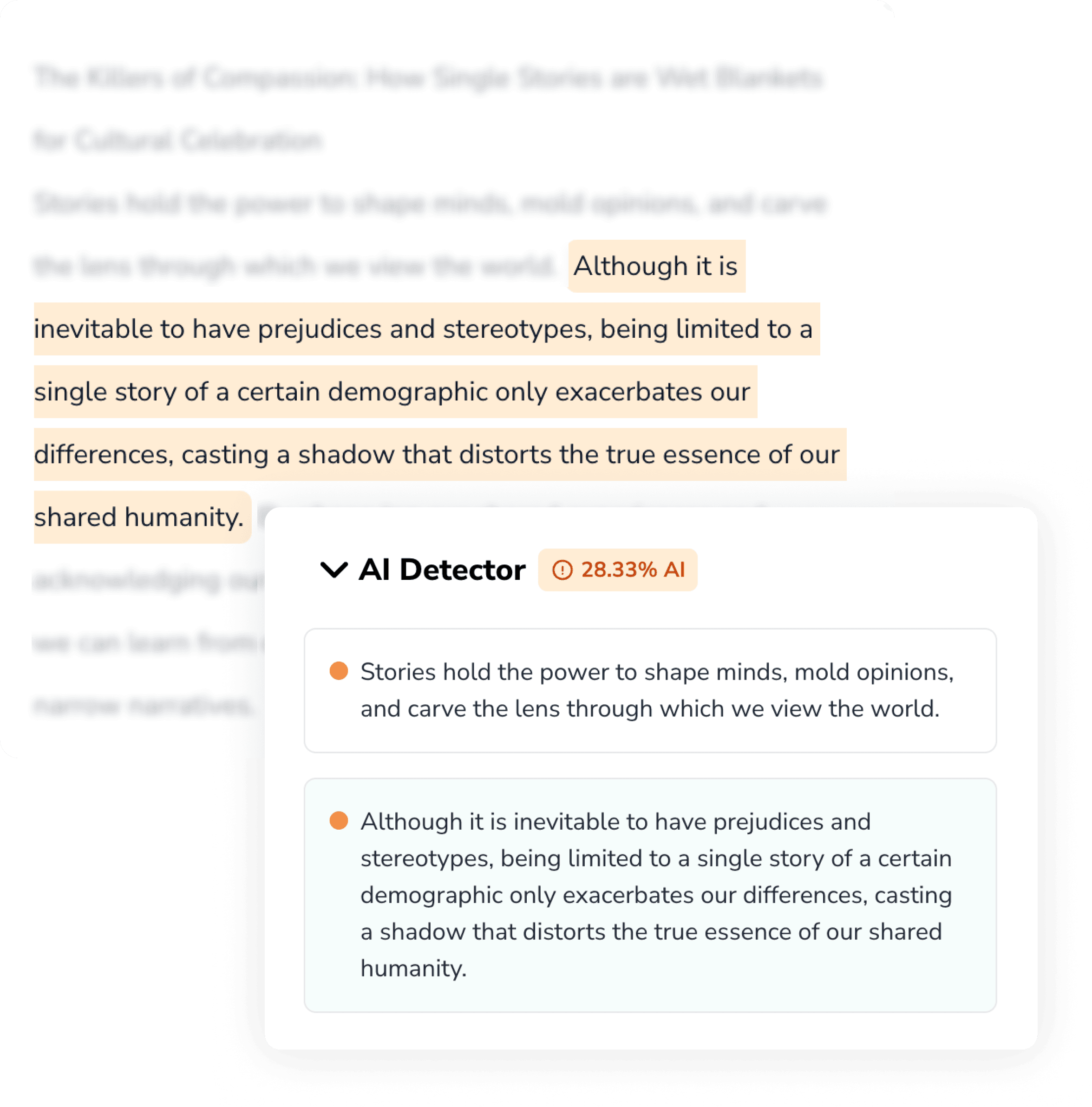
- Highlight suspicious sections
- Explain detection reasoning
- Provide evidence markers
- Show probability scores
- Track patterns
Educational Approach
Teaching opportunities:
- Non-punitive options
- Learning moments
- Discussion starters
- Policy guidance
- Student education
Real-World Impact
Teacher Testimonials
"The AI detector helped me have honest conversations with students about when AI help is appropriate and when it crosses the line." — Michelle R., High School English
"I caught several cases of AI use early in the semester. Now my students know I can detect it, and they're writing authentically." — Dr. James K., University Professor
"The detector doesn't just catch cheating—it helps me teach digital ethics and proper AI use in academics." — Sarah L., Middle School Teacher
Statistical Results
Schools report:
- 85% reduction in AI plagiarism after implementation
- Improved student writing authenticity
- Better understanding of academic integrity
- More meaningful teacher-student discussions
Different Types of AI Detection
Full Document Analysis
Comprehensive checking:
- Entire essay evaluation
- Overall AI probability
- Section-by-section breakdown
- Pattern identification
- Style consistency
Partial Detection
Identifying mixed content:
- Human-AI combinations
- Edited AI text
- AI-assisted writing
- Paraphrased content
- Enhanced grammar
Source Attribution
Understanding origins:
- Likely AI model used
- Generation patterns
- Timestamp analysis
- Version detection
- Tool identification
Best Practices for Using AI Detection
Setting Clear Policies
Establish guidelines:
- Define Acceptable Use: When is AI help appropriate?
- Communicate Clearly: Share policies upfront
- Provide Examples: Show permitted vs. prohibited use
- Explain Consequences: Be transparent about penalties
- Offer Alternatives: Suggest legitimate resources
Educational Approach
Turn detection into teaching:
- Discuss findings privately
- Focus on learning
- Explain why authenticity matters
- Teach proper citation
- Encourage honest practices
Avoiding False Positives
Ensure accuracy:
- Review high-confidence detections
- Consider context
- Look for corroborating evidence
- Allow student explanation
- Use human judgment
Integration with Academic Integrity
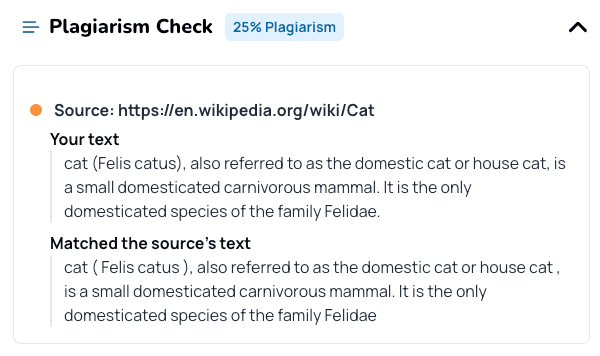
Comprehensive Plagiarism Checking
Complete integrity solution:
- Traditional plagiarism detection
- AI writing identification
- Source verification
- Citation checking
- Originality reporting
Policy Alignment
Supporting institutional standards:
- Honor code compliance
- Academic policy integration
- Customizable thresholds
- Flexible responses
- Documentation tools
Evidence Collection
For academic proceedings:
- Detailed detection reports
- Highlighted passages
- Probability scores
- Pattern documentation
- Exportable evidence
Addressing Common Concerns
"What About Legitimate AI Use?"
Distinguishing between:
- Approved AI assistance (grammar, spelling)
- Inappropriate generation
- Cited AI contributions
- Original work enhancement
- Complete AI authorship
"Will It Catch Everything?"
Realistic expectations:
- High accuracy for common tools
- Continuous improvement
- Some limitations exist
- Human review essential
- Combined approach best
"How Do I Talk to Students?"
Conversation strategies:
- Lead with curiosity
- Focus on learning goals
- Explain detection results
- Discuss appropriate use
- Plan moving forward
Educational Opportunities
Teaching Digital Citizenship
Use detection to explore:
- Ethical AI use
- Academic honesty
- Digital literacy
- Critical thinking
- Future workplace skills
Classroom Discussions
Facilitate conversations about:
- AI's role in education
- Authentic voice development
- Learning vs. shortcuts
- Preparation for careers
- Responsible technology use
Assignment Design
Reduce AI temptation:
- Personal reflection prompts
- Specific examples required
- In-class writing components
- Process documentation
- Unique perspectives valued
Privacy and Fairness
Student Data Protection
Ensuring privacy:
- No permanent storage
- Encrypted processing
- FERPA compliance
- Anonymous detection
- Secure handling
Bias Prevention
Fair detection for all:
- Language variety recognition
- Cultural sensitivity
- ELL considerations
- Writing style diversity
- Regular calibration
Implementation Strategies
Gradual Rollout
Phased approach: Phase 1: Inform students about capability Phase 2: Run detection without penalties Phase 3: Educational conversations Phase 4: Full implementation
Department Coordination
Consistent approach:
- Shared policies
- Training sessions
- Best practice sharing
- Unified messaging
- Support systems
Future of AI Detection
Evolving Technology
Staying ahead:
- New AI model detection
- Improved accuracy
- Faster processing
- Better explanations
- Emerging tool coverage
Educational Evolution
Adapting together:
- AI literacy curriculum
- Ethical use frameworks
- Assessment innovation
- Skill development
- Future preparation
Success Metrics
Measurable Outcomes
Track improvement in:
- Original writing quality
- Academic integrity incidents
- Student understanding
- Policy compliance
- Learning outcomes
Long-term Benefits
Building for success:
- Ethical decision-making
- Authentic communication
- Critical thinking skills
- Professional preparation
- Lifelong integrity
Getting Started
Simple Implementation
- Enable Detection: Turn on in settings
- Set Policies: Define acceptable use
- Inform Students: Share expectations
- Monitor Results: Review detections
- Educate Continuously: Use as teaching tool
Support Resources
Comprehensive help:
- Policy templates
- Student handouts
- Training videos
- Best practices
- Community forum
Choose Integrity with VibeGrade
Join educators who are:
- Maintaining academic standards
- Teaching ethical AI use
- Preparing students for success
- Building trust in education
Ready to Protect Academic Integrity?
See how VibeGrade's AI detection helps maintain authenticity while teaching responsible technology use.
Start Detecting AI WritingFree for Individual Teachers
AI detection is included free with all VibeGrade accounts. Protect academic integrity without straining your budget. School and district plans available with advanced features.
VibeGrade's AI Writing Detector helps educators navigate the challenges of AI in education while maintaining the integrity and authenticity that make learning meaningful. Together, we're shaping responsible digital citizens.